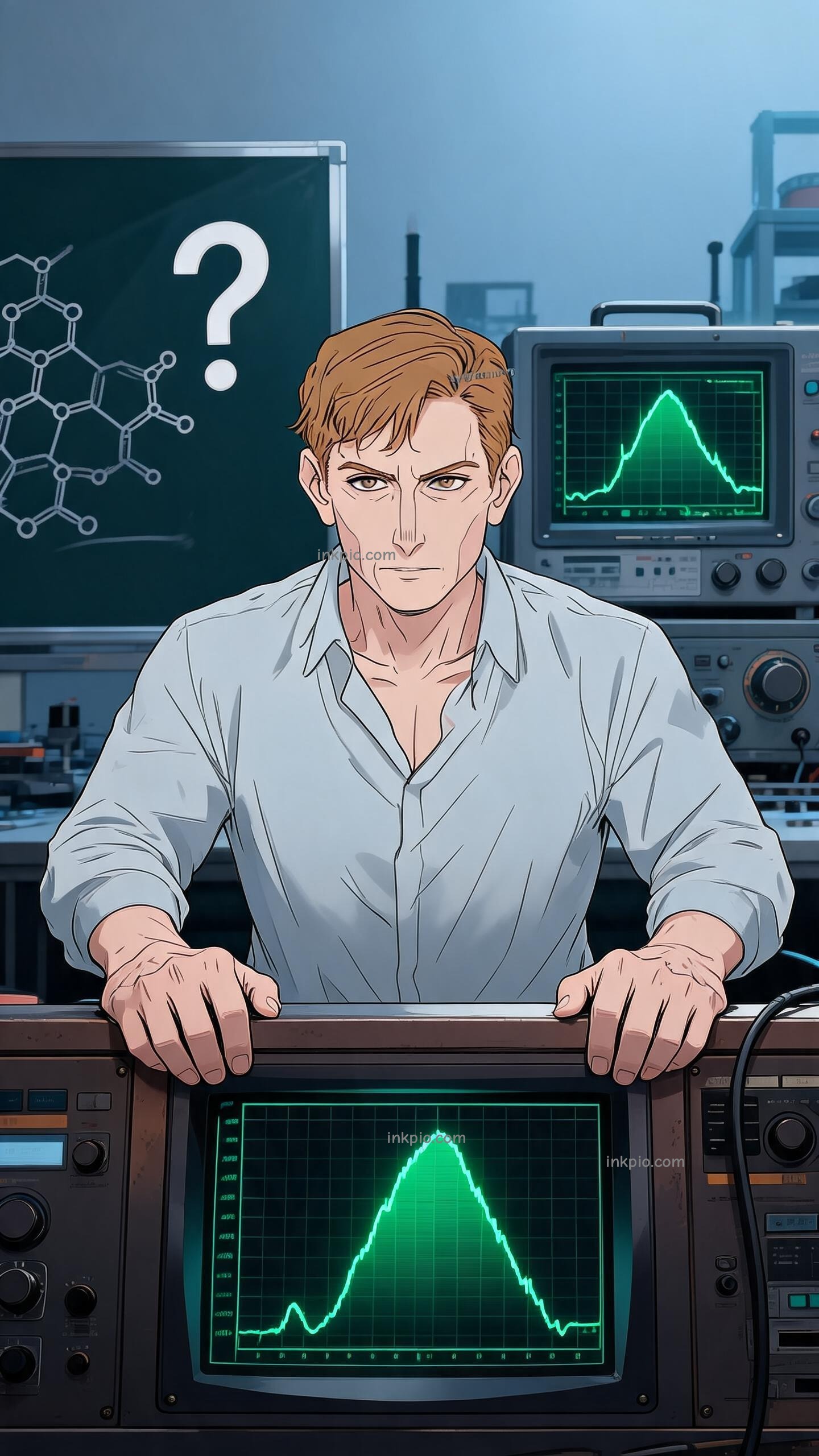
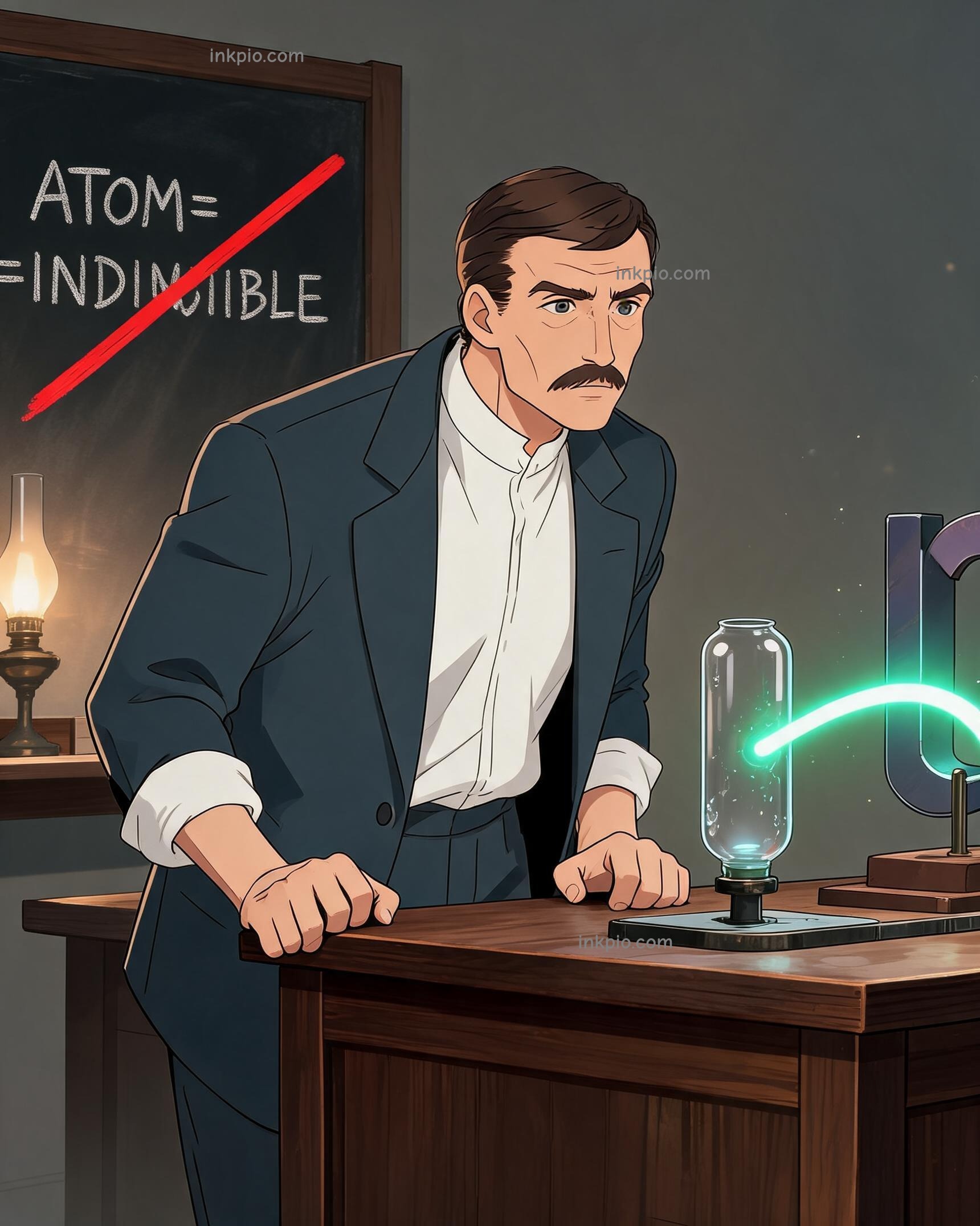

The chalk dust on the blackboard settled like snow over a tombstone. It read: 'Atom equals indivisible.' For decades, this phrase had been the bedrock of physics, a comforting certainty in a chaotic world. But inside the sealed glass tube on J.J. Thomson’s workbench, a ghostly green beam refused to respect that boundary. It curved sharply around the magnet, defying the laws of light and behaving like matter. Thomson stared at it, not with the excitement of discovery, but with the cold sweat of heresy.
In 1897, to suggest the atom could be broken was to suggest the universe was built on sand. Colleagues whispered that Thomson was chasing phantoms. They argued fiercely: were cathode rays waves, ethereal and weightless? Or were they particles, heavy and real? Thomson felt the weight of their skepticism pressing against his chest. He needed to weigh a ghost. He needed to prove that the invisible had mass, or he would lose his credibility along with his career.
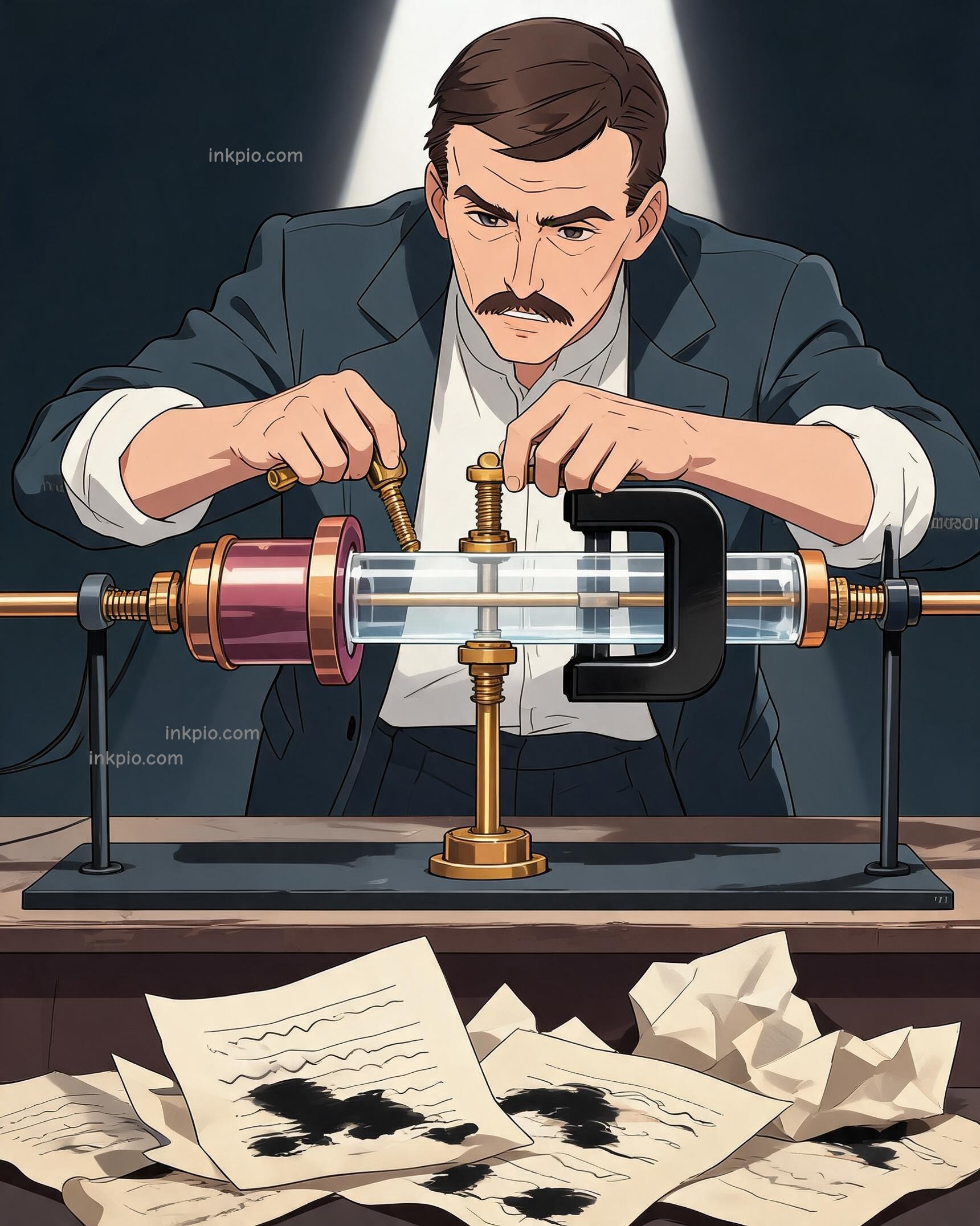
He couldn’t place the beam on a scale. So, he created a battlefield for invisible forces. Along the glass tube, copper plates generated an electric field, pushing the beam one way. Outside, a heavy horseshoe magnet pulled it the other. Imagine two men tugging at opposite ends of a heavy rug. If their strength is perfectly matched, the rug stops drifting. It hangs suspended in tension. Thomson turned the voltage knobs with trembling fingers, watching the glowing streak dance. He adjusted, waited, and adjusted again. The beam had to stop. It had to hold still.
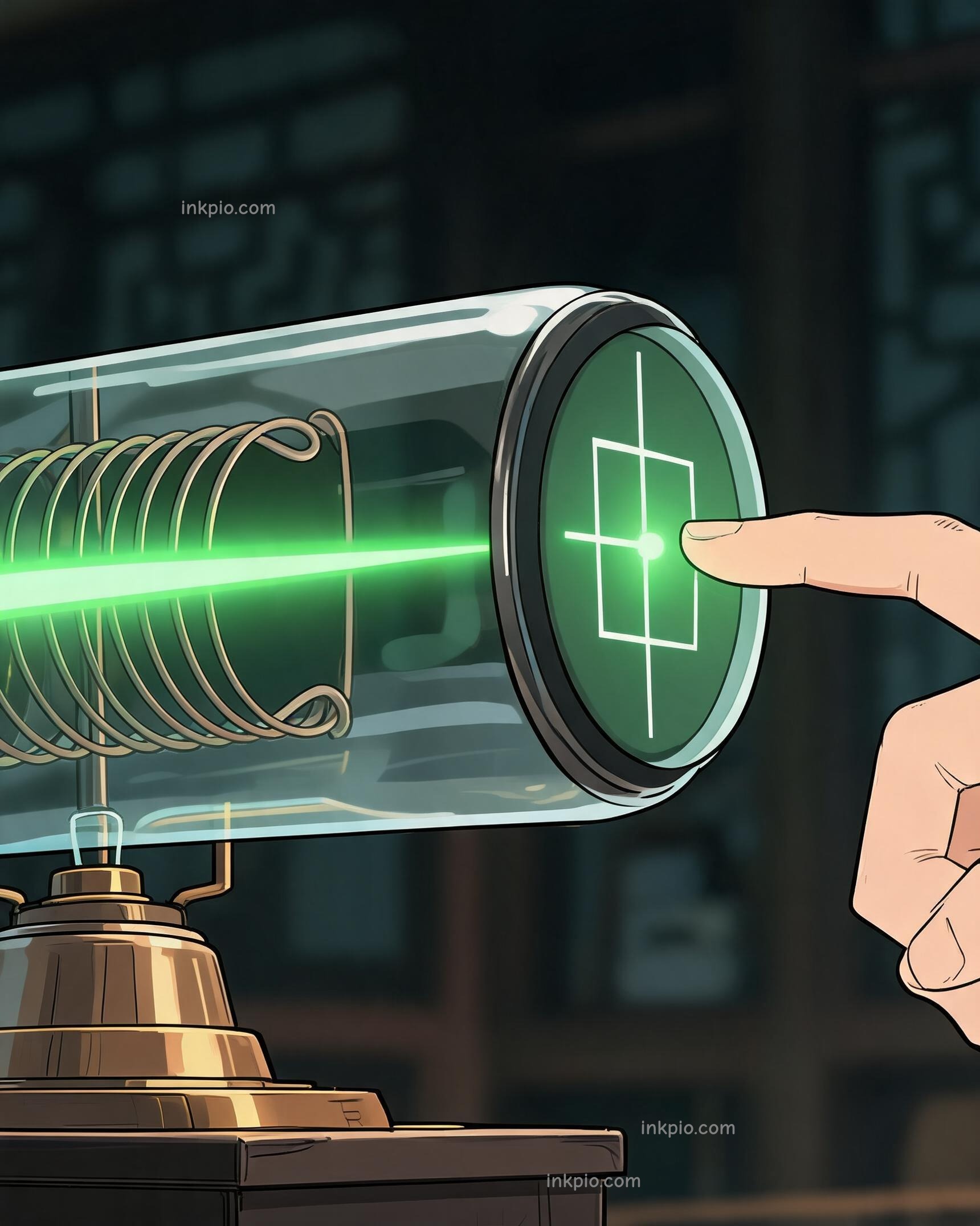
Finally, the green line locked onto a single coordinate. Dead center. The opposing forces canceled each other out. In that moment of stillness, Thomson didn’t just see light; he saw balance. He recorded the exact voltage and magnetic strength required to freeze the beam. These numbers were the key. They held the secret of the particle’s identity. He fed them into his equations, his pen scratching loudly in the silent lab. The calculation was simple, but the result was terrifying.
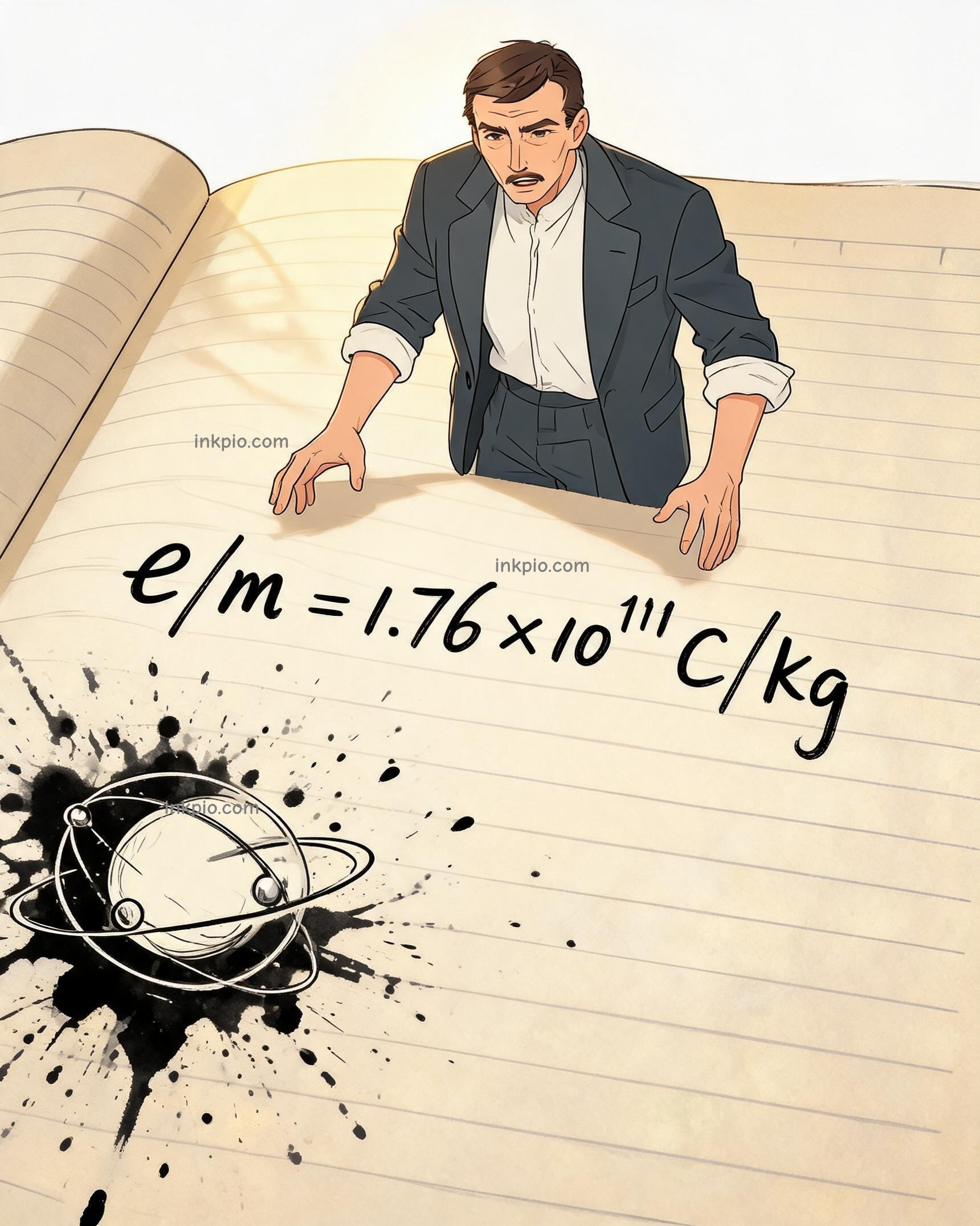
The charge-to-mass ratio emerged: roughly 1.76 × 10¹¹ coulombs per kilogram. Thomson stared at the paper. The number implied a particle carrying a heavy electrical charge but possessing almost no physical weight. It was nearly a thousand times lighter than a hydrogen atom, the lightest known element. This wasn’t just a new particle. It was a fragment of something that was supposed to be whole. The indivisible atom had been shattered. The foundation of physics had cracked under his pen.
April 1897 arrived with a chill. Thomson stood before the Royal Institution, facing a room packed with skeptics. The air smelled of coal smoke and old wood. He laid out his evidence, his voice steady despite the tremor in his hands. He told them the cathode rays carried negative electricity. He told them their mass was incredibly small compared to the hydrogen atom. Silence followed. Not the silence of awe, but the silence of disbelief. Men shifted in their seats. Some frowned, checking their notes. Others looked away, unwilling to accept that the solid world had dissolved into fragments.
Thomson watched their faces. He knew he hadn’t just presented data; he had dismantled their reality. The old textbooks, bound in leather and authority, lost their power that afternoon. A new era of particle physics walked into the lecture hall, uninvited and undeniable. Nobody bothered to lock the door behind it. As the audience filed out, murmuring in confusion, Thomson remained by the blackboard. He looked at the words 'atom equals indivisible' one last time. Then, slowly, he picked up the eraser. The dust rose again, but this time, it didn’t settle. It hung in the air, uncertain, waiting for what would come next.